
WorkWell
Work and health partnerships need a shared operating view across referrals, support activity, employers, services and progression. Focus: Referral coordination, joined-up support and work-related progression.
United Kingdom
Connect programme commissioning, participant journeys, providers, employers, evidence and employment outcomes through one governed operating environment.
Talent Cloud supports organisations responsible for operating or governing complex workforce programmes. It complements learning, assessment, case-management and statutory systems rather than replacing them.
The UK workforce challenge
Modern workforce programmes connect public policy, local commissioning, skills delivery, employment support, employers and participant outcomes. The operating challenge is maintaining one reliable view across that network.
Supporting national and local programmes
The platform adapts to programme structures and governance requirements. These summaries describe operational delivery contexts, not government endorsement or automated compliance.
Supported employment delivery requires structured participant journeys, fidelity, employer engagement, outcome evidence and consistent management information. Focus: Participant support, job outcomes, fidelity and local delivery coordination.
Explore this journeyWork and health partnerships need a shared operating view across referrals, support activity, employers, services and progression. Focus: Referral coordination, joined-up support and work-related progression.
Paid employment pathways depend on employer mobilisation, participant matching, placement support and accountable outcome reporting. Focus: Employer opportunities, matching, six-month jobs and sustained progression.
Explore this journeyPlace-based youth pathways require clear ownership across education, training, employment support and employers. Focus: Engagement, learning or earning pathways, local governance and outcomes.
Short, employer-led training programmes require cohort control, employer demand, interviews, progression and evidence. Focus: Cohorts, employer co-design, interviews and employment progression.
Explore this journeyLocal skills priorities become operational when employer demand, provision, participation and outcomes can be connected. Focus: Employer demand, local provision, delivery partnerships and impact visibility.
Flexible skills investment requires programme governance across employers, providers, participants, funding rules and progression. Focus: Employer investment, provider delivery, participant evidence and progression.
Locally managed programmes require consistent project oversight, evidence, delivery-partner accountability and reporting. Focus: Local investment, provider oversight, evidence and accountable outcomes.
Sector-based pathways connect pre-employment training, work experience and guaranteed interviews around real vacancies. Focus: Referrals, training, workplace activity, interviews and employment outcomes.
Who we support
Each journey begins with the organisation's operating responsibility, then shows the platform capabilities, evidence and outcomes that matter.
Operate employment support programmes with connected participant journeys, employer engagement, evidence, outcomes and reporting.
Explore this journeyConnect college-led skills programmes to employers, workplace opportunities, participant progression and employment outcomes.
Explore this journeyOperate employer-connected training and workforce programmes with stronger cohort control, evidence, partnerships and outcomes.
Explore this journeyGovern locally commissioned workforce programmes across providers, residents, employers, evidence and employment outcomes.
Explore this journeyCoordinate devolved employment and skills programmes across places, providers, employers, evidence and outcomes.
Explore this journeyGovern employer-led workforce programmes across providers, participants, opportunities, evidence and employment outcomes.
Explore this journeyStrengthen programme commissioning with clearer provider visibility, participant evidence, employer activity and outcome accountability.
Explore this journeyThe operating platform
Talent Cloud is centred on the workforce programme. It connects the organisations, responsibilities and evidence needed to operate that programme with greater control.
Define programme structures, cohorts, roles, milestones and delivery responsibilities.
Coordinate referrals, support, progression, interventions and next actions.
Connect employer demand, opportunities, matching, placements and feedback.
Capture operational records throughout delivery and strengthen outcome reporting.
Programme delivery lifecycle
A consistent lifecycle creates shared language and ownership across programme teams, providers, employers and commissioners.
Commission
Define programme purpose, target groups, outcomes and delivery responsibilities.
Mobilise
Configure partners, cohorts, workflows, evidence and governance.
Engage
Coordinate referrals, outreach, eligibility and participant onboarding.
Support
Track activity, progress, barriers, interventions and ownership.
Connect
Develop employers, opportunities, placements and workplace support.
Evidence
Capture delivery and outcome records as activity takes place.
Report
Maintain consistent programme, provider and outcome information.
Improve
Use operational insight to strengthen delivery and commissioning.
Product evidence
Product evidence is framed around the operational challenge, the platform capability and the resulting improvement.
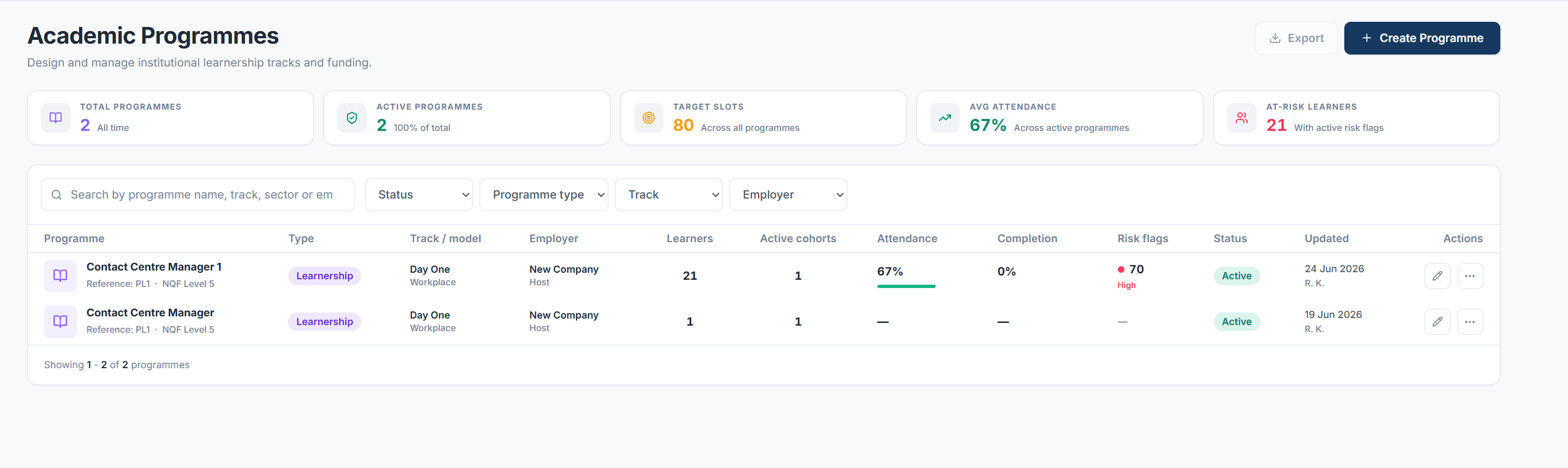
Programme owners can maintain one governed view across delivery activity without relying on manually assembled reporting packs.
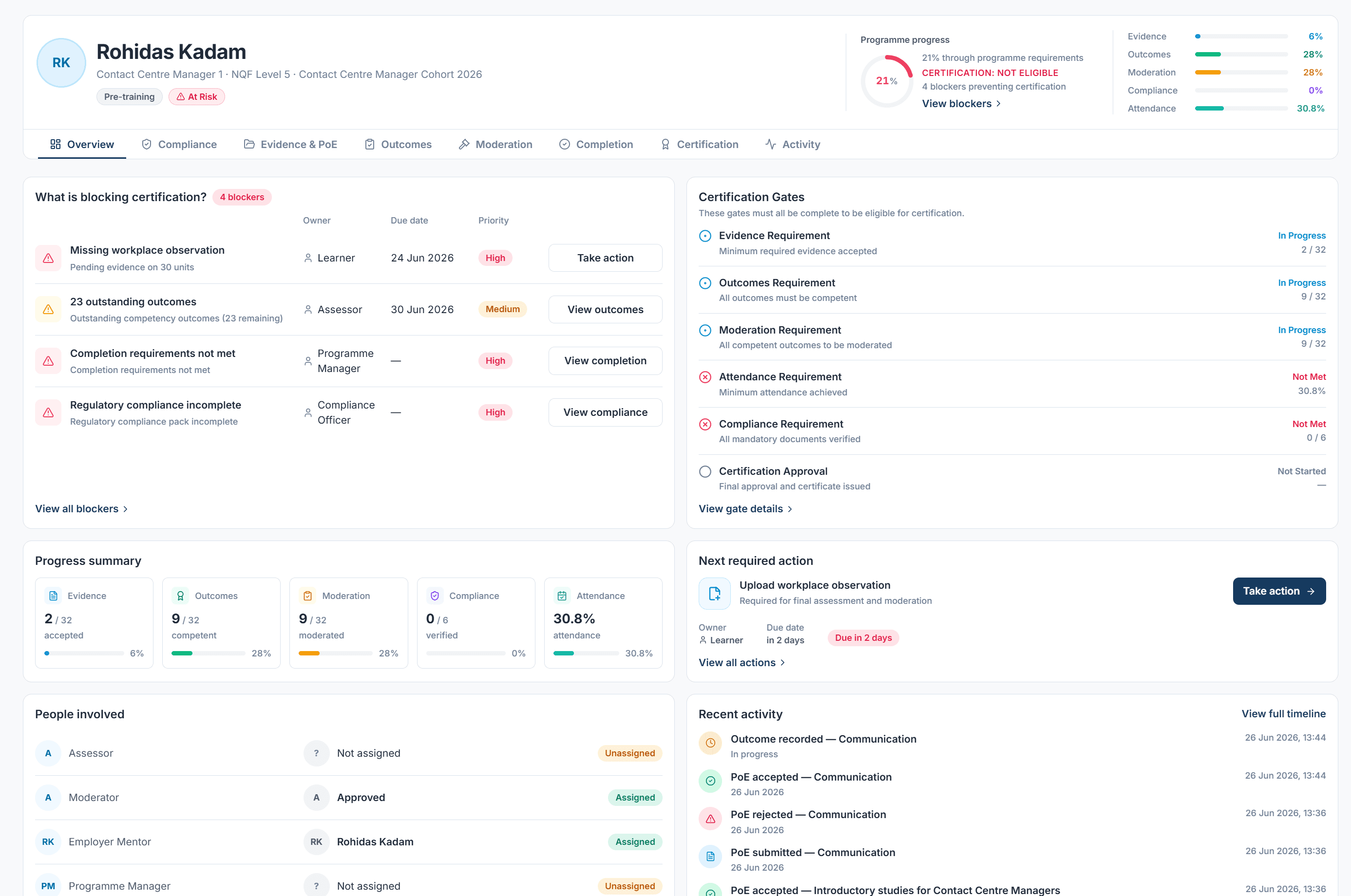
A connected participant record strengthens operational decisions and creates clearer foundations for assurance and reporting.
Operational outcomes
The platform provides a more reliable information and coordination foundation. It does not guarantee programme or employment outcomes.
Evidence and accountability
Consistent operational evidence strengthens governance without replacing commissioner judgement, formal assurance or statutory reporting.
Policy and Funding
National and local priorities, investment and programme conditions.
Commissioning
Outcomes, delivery standards, governance and accountability.
Delivery Network
Providers, colleges, employers, services and specialist partners.
Participant Journey
Engagement, support, skills, workplace activity and progression.
Evidence Layer
Operational records, assurance, exceptions and outcome evidence.
Public Value
Employment outcomes, learning, accountability and programme improvement.
Resource Centre
Explore practical guidance on governance, employer engagement, evidence and employment outcomes.
Understand the category and the operational gap it addresses.
Read the guidanceA practical framework for ownership, evidence and accountability.
Read the guidanceCreate clearer outcome definitions, evidence and reporting practices.
Read the guidanceDiscovery session
We will explore your programme portfolio, delivery network, employer model, evidence requirements and outcome priorities.